
Why restraint creates room for content, how hierarchy replaces decoration and where a calm interface still needs moments of real tension.
Quiet is not empty
A quiet interface still needs a clear point of entry. It should tell a reader where they are, what matters and what they can do next. Removing those signals does not produce restraint; it produces uncertainty.
The useful question is not how little can remain on the screen. It is how clearly the remaining elements explain the page. A small well-placed label can be more valuable than another large empty space.
Let hierarchy do the work
Typography can establish most of a page's hierarchy before a coloured panel is added. Title size, line length and the space around a paragraph tell readers which pieces belong together. A consistent rhythm makes a long article easier to enter and easier to resume.
Headings need to remain headings on a narrow screen. If a secondary title becomes larger than the page title, the hierarchy has lost its meaning. Test the longest real text instead of tuning the layout around the shortest example.
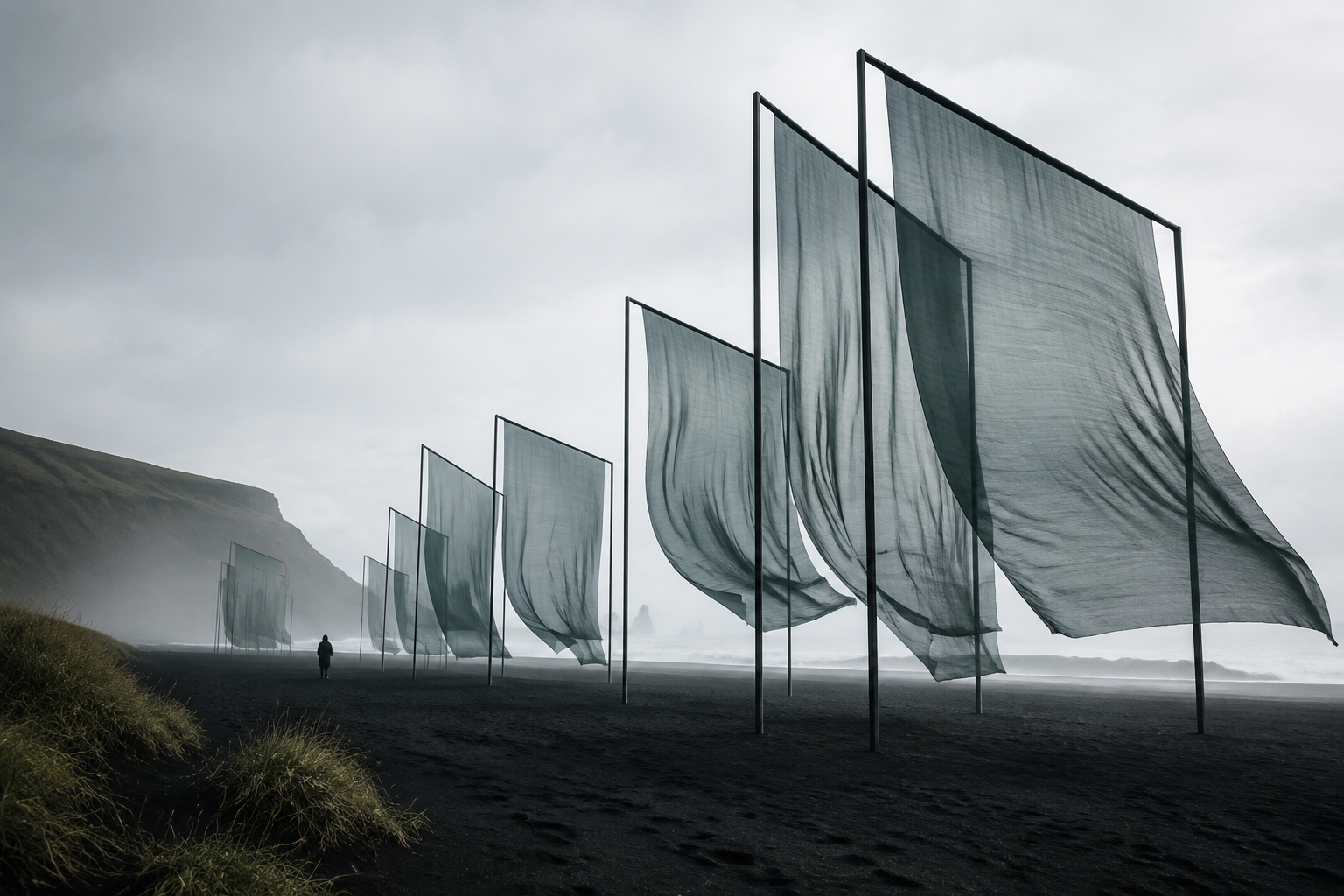
Repetition establishes the rhythm; movement brings variation within it.
Motion should explain a change
A transition is useful when it helps someone follow what changed. A menu opening, an accordion expanding or a hovered image settling back can benefit from a small amount of movement. Motion becomes distracting when the same performance repeats at every section.
Reading is already an active process. Content that jumps after an animation or disappears until it is revealed asks the reader to negotiate the interface as well as the subject. Essential information should always be available.
Leave a clear next step
A calm page can still be decisive. The main link should look usable, receive visible keyboard focus and have enough room to be tapped. The end of an article should offer a relevant next read or a straightforward return to the archive.
Quiet design succeeds when people notice the content and feel comfortable moving through it. The work behind that ease is precise, even when the final surface appears simple.
Share this article ↗ ← All journal entries
